 4 min read
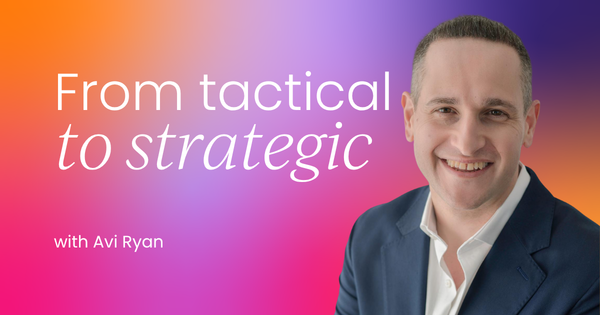
This article is based on Avi Ryan's conversation with Tana Jackson on the RevOps Unboxed podcast.
I have spent many years in the revenue operations space, working across a broad spectrum of companies. My career spans very early-stage startups all the way to large-scale corporations, including seven years at Google in the ads business.
I have seen different flavors of RevOps and understand what works at each company size.
We often see companies make similar mistakes as they try to scale their go-to-market functions.
The reality of scaling revenue operations
Moving to a massive organization completely changes the perception of this role.
Smaller companies generally view revenue operations as a tactical support function. Large enterprises treat it as a strategic go-to-market leader.
Putting immense structure in place does mean you lose some flexibility. We live in the numbers all day and can spot trending issues quickly. Large companies take a lot of time to drive change.
You have to understand that moving fast is simply impossible when major cross-functional alignment is required.
Prioritizing change management
Before embarking on a six-month project, you have to evaluate the potential impact.
We always look at whether the expected business impact is actually worth the effort. Almost every major project starts with a small proof of concept.
You want to test changes in a small sample of markets before rolling them out globally and risking the entire program.
Enterprise companies also excel at change management.
Agility works against smaller companies when they implement a change, assume everyone adopted it, and move on. A year later, they realize no one actually used the new process.
You must deliberately plan an adoption phase and measure success using adoption rates before considering revenue impact.
How systems break during growth
Founders naturally handle the go-to-market motion in the early days of a startup.
They usually hire a junior administrator to build basic reports and opportunity stages. As the company grows and hires a large sales team, founders step back. They ask the sales leaders to take charge of the go-to-market strategy.
Sales teams build systems designed purely to sell in the current moment. What works today will likely break in two months.
Sales leaders often push junior admins to endlessly add new dashboards, automations, and checkboxes. Fast forward two years, and the company has created a monster infrastructure that no one understands.
Cleaning up the customization mess
We see this clearly when you open an opportunity stage and find hundreds of custom fields. Running a report shows these fields are empty.
Sales usually asks for less, while finance, marketing, and customer success constantly request new data points.
You need a strong leader to step in, evaluate scalability, and clean up the system.
Over-customization is a massive trap for growing teams.
I have seen companies with fifty employees where every five-person team gets a custom process. Massive organizations keep tens of thousands of people on the same infrastructure. They refuse to spend time on endless customization because scalability has to remain the priority.
Navigating AI adoption across different company sizes
We actually see faster adoption of artificial intelligence tools in smaller companies. The cost aligns with their size, and they can quickly determine if the tool provides value. They also face fewer hurdles regarding data security compared to massive corporations.
Large enterprises evaluate every new tool for data privacy risks before even considering a pilot. They also buy tens of thousands of licenses at a time. Spending millions of dollars on a tool that no one uses is a massive financial risk. They have to be incredibly cautious about rolling out new technology.
 Eve Chatfield
Evaluating tools based on leadership priorities
You have to look past the hype of new technology and focus on business impact.We must understand what our company leadership cares about most right now.
You can then group those priorities into buckets and evaluate new tools against those specific needs.
Implementing a popular brand name tool means very little if it fails to address leadership priorities. You will struggle to demonstrate value or justify the investment during renewal time.
Evolving from order taker to strategic partner
Leadership will view your team as an administrative overhead cost if you only focus on tactical execution. We have to change the mindset of teams perceived purely as operational support.
You must create a roadmap of projects that tie directly to business impact.
Demonstrating financial impact justifies further investment in your department. This approach secures your seat at the table during go-to-market strategy discussions. You must remember that operational excellence remains the backbone of your role. You build your strategic influence on top of a flawless operational foundation.
 Rebecca Stewart
Developing executive presence
My best advice goes back to my younger self. I used to think my role started and ended with reports, process optimization, and CRM administration.
You have to step outside your comfort zone and interact with executive leadership. We must learn to communicate our concepts in a way that matters to the C-suite.
Moving from reactive reporting to proactive strategic leadership is the only way to build a lasting, impactful career in this space.


Revenue operations alliance insider
Thank you for subscribing
Level up your revenue operations alliance career & network with revenue operations alliance experts.
An email has been successfully sent to confirm your subscription.
 Follow us on LinkedIn