
 5 min read
Be it annual, quarterly, or monthly, reviews are far more than routine checkpoints, they are strategic inflection points. Beyond evaluating performance, these sessions provide organizations with the opportunity to reflect, recalibrate, and pivot toward future objectives. The way leaders approach these reviews can shape not only the close of the current period but also set the tone for long-term success.
What the review should not be is your first sign that something is off.
In other words, when you’re halfway through your fiscal year, there should be no alarm bells. By now, your revenue teams have been watching the data closely for months. They have seen the trends and adjusted where they could. And now, they’re facing a critical decision point: Whatever isn’t moving the needle yet needs a more intentional response.
This is the moment to rally. To reset. To transform insight into collective action.
Let’s break down how RevOps leaders can use reviews to drive measurable results.
Start with what you (should) already know
Effective reviews begin with one thing: a foundation of clean, consistent, and shared data.
Ideally, your team has been tracking data for several quarters to enable meaningful forecasting, especially if seasonality plays a role in your business cycle. This level of visibility helps you see not just what’s happening now, but what’s likely to happen next.
A strong foundation includes:
- Unified KPIs across revenue teams.
- Dashboards tailored to role, but sourced from the same data.
- Clear stage definitions to track movement accurately.
When everyone is working from the same source of truth, it facilitates conversation and collaboration, helping teams address issues constructively and avoid any finger pointing.
It's critical to have systems and tools integrated in a way that allows for seamless reporting and collaboration. If marketing is tracking engagement in one platform and sales is logging conversations in another, you risk losing the connective tissue that turns insights into action.

Understand the signals
You should already be monitoring:
- Pipeline velocity and conversion rates.
- Deal stage health and leakage points.
- How many sales-ready accounts are an ICP fit.
- The engagement mix across the buyer journey.
Too often, organizations fixate on pipeline creation while neglecting earlier stage awareness and education. But buyer journeys don’t start at the bottom of the funnel. If velocity is low, the real issue could be upstream: missing content, off-base targeting, or message fatigue among the people who matter most.
Another key area to examine is lead quality. If your sales team is spending time on accounts that aren’t an ideal-fit, or if they’re getting stuck at the same stage repeatedly, it could point to misalignment in ICP definition or gaps in your qualification process.
From insight to action: What now?
If your dashboards tell you something’s off, it’s time to act. You can’t fix everything at once, nor should you. Instead, think surgically: Prioritize two to three levers that can move the needle now.
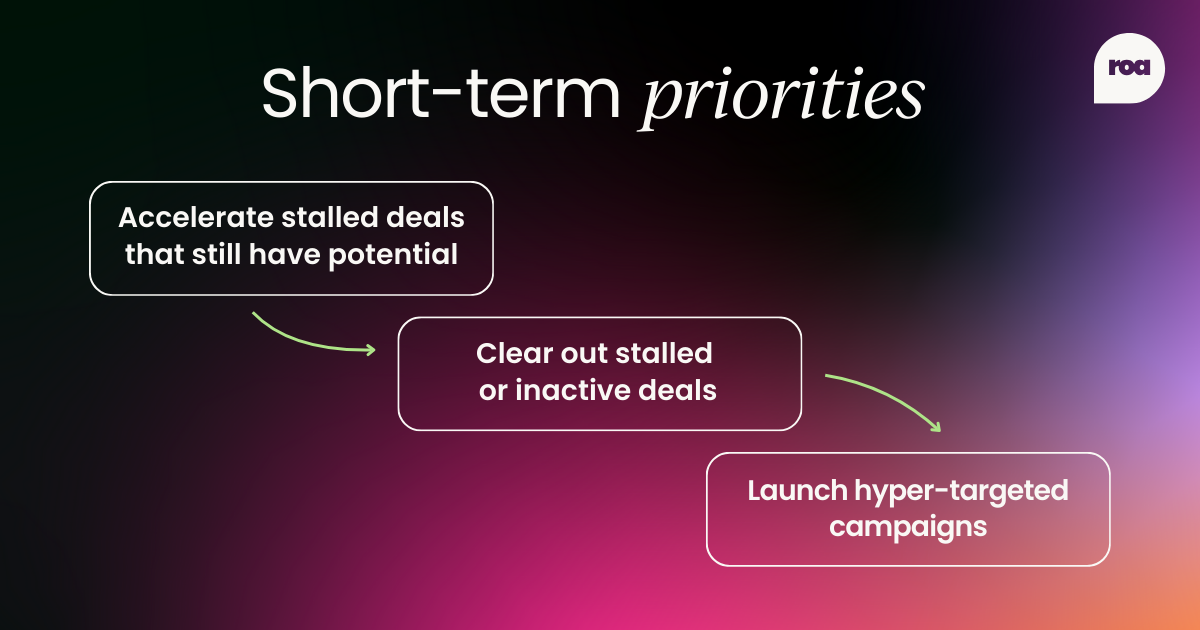
Short-term priorities (30-60-90 day impact)
- Accelerate stalled deals that still have potential. This might mean pricing adjustments, refreshed enablement materials, or outreach based on intent signals.
- Clear out stalled or inactive deals that are clearly going nowhere and just draining time and attention.
- Launch hyper-targeted campaigns. If Q4 revenue depends on Q3 pipeline, focus on driving sales-ready opportunities into the hands of SDRs and AEs.
Not sure where to start? Consider grouping stalled deals by common characteristics such as industry, deal size, and persona, and testing segmented outreach plays. You may uncover patterns that help refine your GTM motion beyond the short term.
Long-term priorities (strategic, structural shifts)
- Reevaluate your ICPs and buying committees. Are you still speaking to the right people?
- Map influence accurately. Decision-makers may not be the ones doing the research. Pay attention to the managers and directors gathering information on behalf of the C-suite; they can become your champions at later stages.
- Stay focused. Resist the urge to cast a wider net; it dilutes your message and wastes valuable resources.
Use the review to test core assumptions, find blind spots, and focus on long-term revenue growth. This focus sets successful organizations apart from those chasing only short-term results.

Prioritize alignment over ego
Action without alignment is just noise. This is where RevOps earns its strategic seat at the table by ensuring the insights uncovered during review translate into coordinated action across functions.
Here’s what that looks like:
- Sales: Refresh messaging and revive outreach strategies based on what’s working now.
- Marketing: Shift budget toward high-converting campaigns; nix what’s not producing.
- Customer Success: Get proactive about renewal and expansion risks.
- RevOps: Ensure transparency, enforce shared definitions, and maintain integrated reporting across teams.
None of this happens without strong communication. And if there’s ego in the room, it’s time to check it. Transparency makes action possible; collaboration makes it successful.
The real red flag? Surprise
A review shouldn’t shock anyone. If it does, there’s a deeper issue: poor data governance, misaligned systems, infrequent check-ins, or even lack of ownership. Surprise is the symptom. Siloed systems and inconsistent reporting are the cause.
Set safeguards to ensure visibility:
- Monthly and quarterly check-ins.
- Unified definitions across teams.
- One system of record for pipeline data.
These habits create forward visibility, so you can pivot early instead of reacting late and before a slow quarter becomes a lost year.
Also worth noting: Even with perfect data and execution, things can go sideways. A client gets acquired. Budgets freeze. Key champions leave. That’s why agility, not perfection, should be the end goal of your planning.
The bottom line: Make moment count
Organizations can reflect on what’s working and what needs improvement when they have a strong RevOps foundation, clean data, and aligned execution, enabling teams to rally around intentional, transformative moves.
Melissa Werkenthin is the Director of RevOps Strategy at Intelligent Demand, a 2X company that helps B2B enterprises design and optimize go-to-market programs that accelerate growth. Melissa has deep expertise spanning Fortune 500 companies, startups, and agencies and brings a strategic lens to solving complex revenue operations challenges.


Revenue operations alliance insider
Thank you for subscribing
Level up your revenue operations alliance career & network with revenue operations alliance experts.
An email has been successfully sent to confirm your subscription.
 Follow us on LinkedIn