

 5 min read
One of the most common things I hear from leadership teams is, "We're aligned. Everyone is using the same CRM."
Then we open the system.
What looks aligned on the surface often isn't. Teams may be working on the same platform, but they're not necessarily working the same way. One business unit may define lifecycle stages differently than another.
Sales managers may interpret pipeline stages differently across regions. Dashboards may appear unified while pulling from inconsistent inputs. The technology is shared, but the process isn't.
That's why the conversation around AI often misses the point.
In LeadG2's recent Revenue Enablement in the AI Era research, every respondent reported using or piloting AI in some capacity. Nearly 90% reported increased efficiency. Yet only 12% said AI was deeply integrated into daily workflows.
Organizations are getting faster but they aren't necessarily becoming more aligned. The challenge isn't AI adoption but the operating model AI is being deployed into.
Too often, organizations are layering AI on top of disconnected systems, inconsistent messaging, fragmented ownership, and unclear processes. In those environments, AI doesn't solve operational problems. It scales them.
 Avi Ryan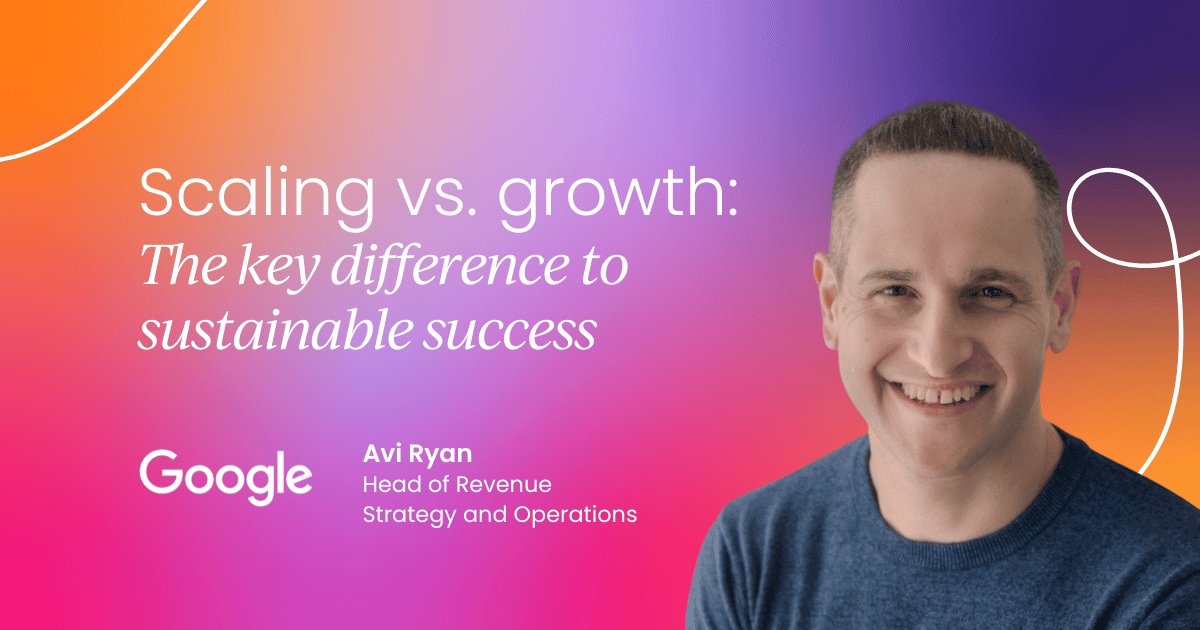
AI is an amplifier, not a fix.
AI is remarkably effective at accelerating work. It can summarize information, generate content, surface insights, and automate tasks at speed.
What it cannot do is create alignment.
It cannot standardize processes that were never defined, resolve disagreements about data definitions, determine which version of a sales message is correct, or create trust where trust doesn't already exist.
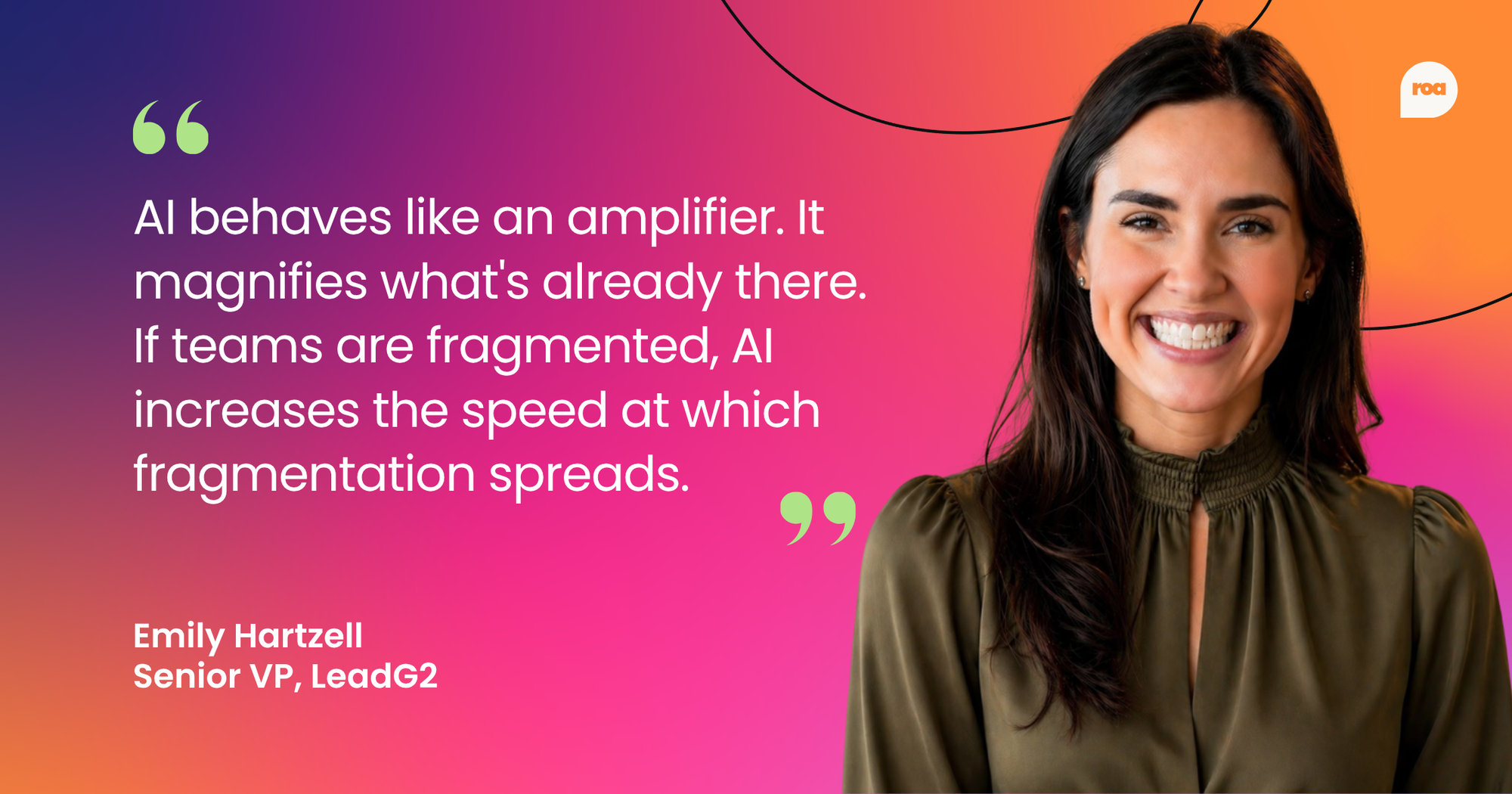
AI behaves like an amplifier. It magnifies what's already there.
Here is where the operating model breaks down:
Disconnected systems create stranded AI insights
Only 23% of respondents reported having fully integrated systems across sales and marketing. Even more revealing, 52% of executives believe their systems are fully integrated, compared to only 6% of individual contributors.
That gap mirrors what we see in client engagements constantly. Leadership believes alignment exists because everyone is technically working inside the same CRM. But one team uses lifecycle stages one way, another has entirely different definitions of deal stages, and reporting is built on inconsistent data entry practices. Dashboards appear unified, but the underlying processes are not.
The result is that AI-generated insights become difficult to trust or operationalize. Teams receive recommendations, forecasts, or alerts, but inconsistent underlying data raises more questions than answers.
Inconsistent messaging becomes inconsistency at scale
AI can draft emails, generate proposals, summarize calls, and personalize outreach, but it is only as good as the information it learns from.
When sales teams are working from multiple versions of the truth, an outdated pitch deck is still circulating, updated messaging is on the website, a proposal template never revised, and reps with their own locally saved templates, AI doesn't create consistency as it pulls from inconsistent inputs and produces inconsistent outputs.
Fragmented ownership leads to fragmented execution
Only 10% of respondents identified RevOps as the primary owner of AI. Sales focuses on productivity. Marketing focuses on content and campaigns.
Executive leadership focuses on efficiency, but customers don't experience those functions separately, they experience one revenue journey.
Without operational ownership connecting those efforts, organizations risk optimizing individual departments while leaving larger revenue challenges unresolved.
The leadership vs. frontline perception gap
74% of executives believe their organizations are aligned. Only 31% of individual contributors agree.
Leadership sees a dashboard but frontline teams see the daily realities behind the data, whether opportunities are in the correct stages, whether close dates are accurate, whether the lead source was captured properly, and whether activities are being logged consistently.
 Alex Walton
AI can summarize pipeline data, identify trends, and generate forecasts, but it cannot create confidence in data the organization does not already trust. Data trust comes before AI trust.
AI effectiveness depends on integrated systems, trusted data, standardized processes, and shared definitions, all RevOps responsibilities. RevOps sees how information moves across the entire revenue organization, understands where friction exists, and can address root causes instead of symptoms.
Without RevOps ownership, AI becomes a collection of disconnected initiatives rather than a coordinated revenue strategy.
How to align before you scale AI
- Establish clear ownership: AI should not operate as a standalone sales or marketing initiative. Ownership should include accountability for systems, data, processes, and adoption across the revenue organization.
- Strengthen your data foundation: Only 27% of respondents reported being very confident in their CRM and AI-generated data. Trustworthy outputs require trustworthy inputs.
- Clarify the process before automating it: Marketing may believe a lead is sales-ready because a workflow passed it to sales. Sellers may not understand why they received it or what to do next. AI can help summarize, prioritize, or personalize that handoff, but only if the process itself is already clear. AI can accelerate a good process but cannot define one.
- Invest in enablement alongside technology: Lack of training and internal expertise is the top barrier to AI adoption, cited by 63% of respondents. Organizations focus heavily on purchasing technology while underinvesting in helping teams understand how and when to use it. The result is uneven adoption and inconsistent execution.
- Eliminate workaround culture: When processes are unclear, people create workarounds, spreadsheets outside the CRM, locally saved templates, manual follow-up tracking, and Slack messages filling operational gaps. From leadership's perspective, the system appears adopted. From the seller's perspective, it isn't helping them do their job. AI layered onto that environment may improve isolated tasks, but it won't eliminate the underlying inefficiency.
The real role of AI in RevOps
Most organizations don't have an AI problem but an alignment problem. AI simply makes that reality harder to ignore.
When leadership trusts the dashboard but frontline teams don't trust the data, AI won't fix it. When sales and marketing operate from different definitions of a qualified lead, AI won't fix it. When teams are working from different messages, different processes, and different versions of the truth, AI won't fix it.
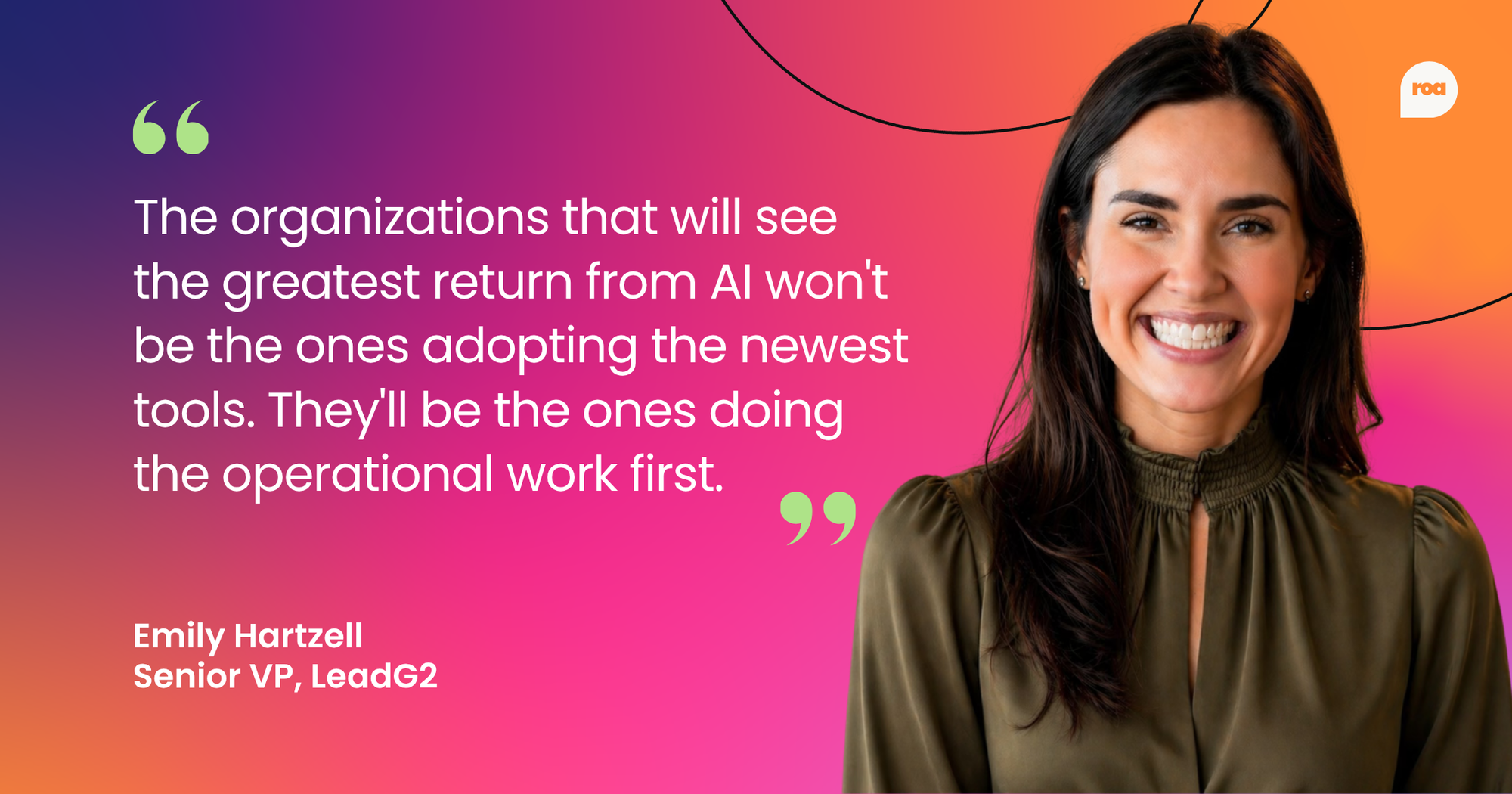
The organizations that will see the greatest return from AI won't be the ones adopting the newest tools or automating the most workflows. They'll be the ones doing the operational work first: aligning systems, creating process clarity, establishing data trust, and ensuring teams are working from the same playbook.
Because AI doesn't fix broken revenue systems. RevOps does.


Revenue operations alliance insider
Thank you for subscribing
Level up your revenue operations alliance career & network with revenue operations alliance experts.
An email has been successfully sent to confirm your subscription.
 Follow us on LinkedIn